AAV Manufacturing
Late-Phase Manufacturing
As your AAV program advances toward pivotal studies and commercialization, the manufacturing questions change. Is your process well understood? Can it perform consistently? Are you prepared for validation, PPQ, and the regulatory expectations ahead? Our late-phase experts help you answer those questions and build the process understanding and manufacturing readiness needed for commercial supply.

A Structured Path to Commercial Readiness
Preparing for commercial manufacturing brings together many interconnected activities. Our late-phase manufacturing packages help you understand what your program needs, identify potential gaps, and build a strategy for process characterization, validation, PPQ, and regulatory readiness.
Late-Phase Manufacturing Packages:
Program Risk Assessment
- Program Risk Assessment Stage I
- Process Risk Assessment (PRA)
- Materials Risk Assessment (MRA)
- Process Characterization Planning
PPQ Readiness
- Scale Down Model Qualification
- Process Characterization
- Analytical Method Validation
- Program Risk Assessment Stage II
- Parameter Criticality Assessment (PCA)
- Process Failure Modes & Effects Analysis (pFMEA)
- Raw Material Qualification
- Engineering Studies
- PPQ Campaign
BLA Readiness
- CMC Data Package (PPQ Campaign Summary)
- Validation Master Plan
- Container Closure Integrity Testing (CCIT)
- Contamination Control Strategy (CCS)
- Viral Clearance
- & more
- Shipping Validation
- Leachables & Extractables (L&Es)
- PLI Readiness
- Commercial Supply Planning
From Feasibility to a Validated, Commercial-Ready Process
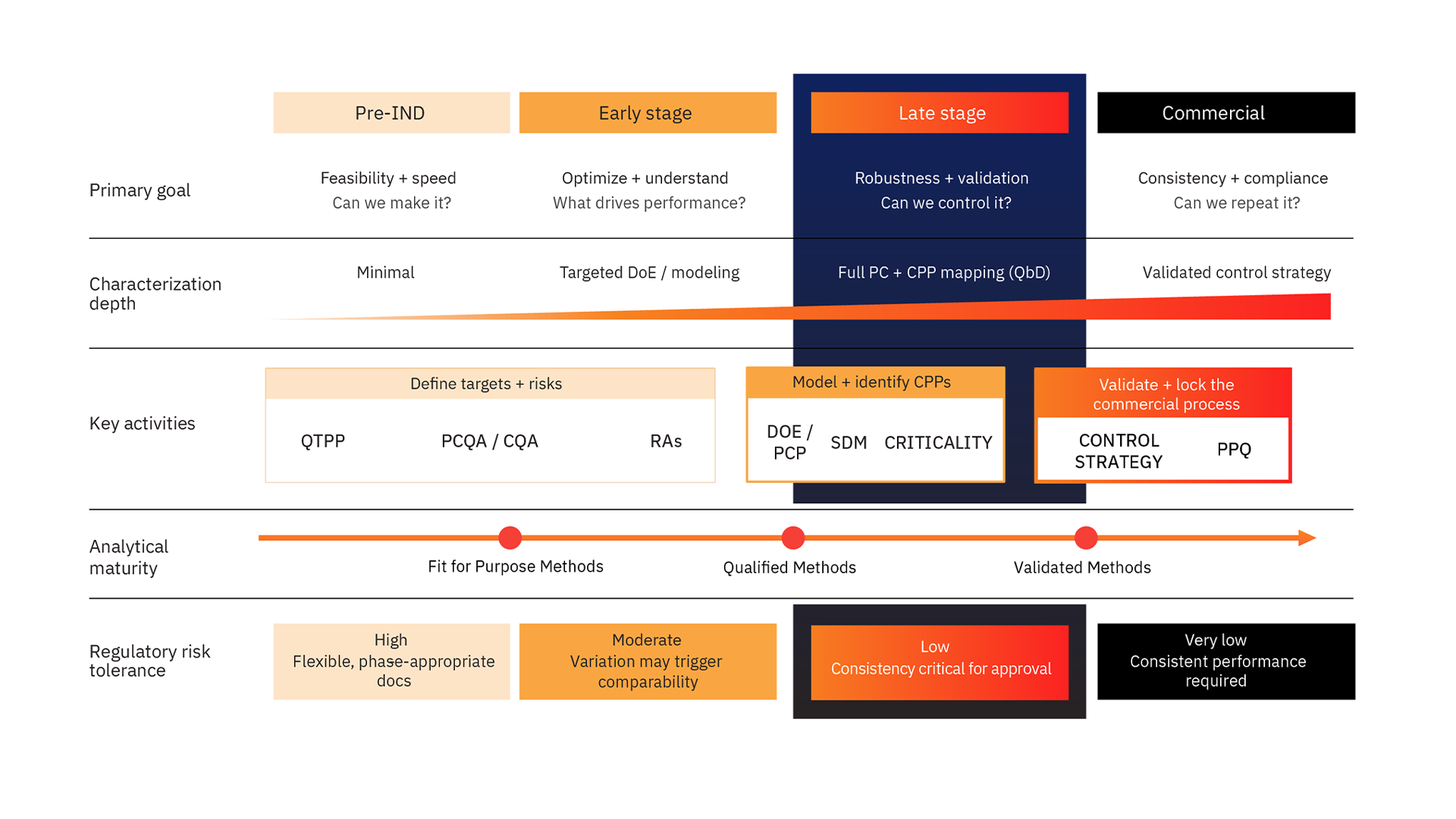
As your program advances, so do the expectations for how well your manufacturing process is understood, characterized, and controlled.
Process Characterization: Building Process Understanding
Before you can validate your process, you need to understand how it performs and which parameters matter most. Process characterization uses risk assessment, qualified scale-down models, and statistically designed studies to understand how process parameters and material attributes influence product quality and establish an appropriate control strategy. Our approach aligns with the industry-developed ARM/NIIMBL Project A-Gene framework.
Analytics Integrated Throughout
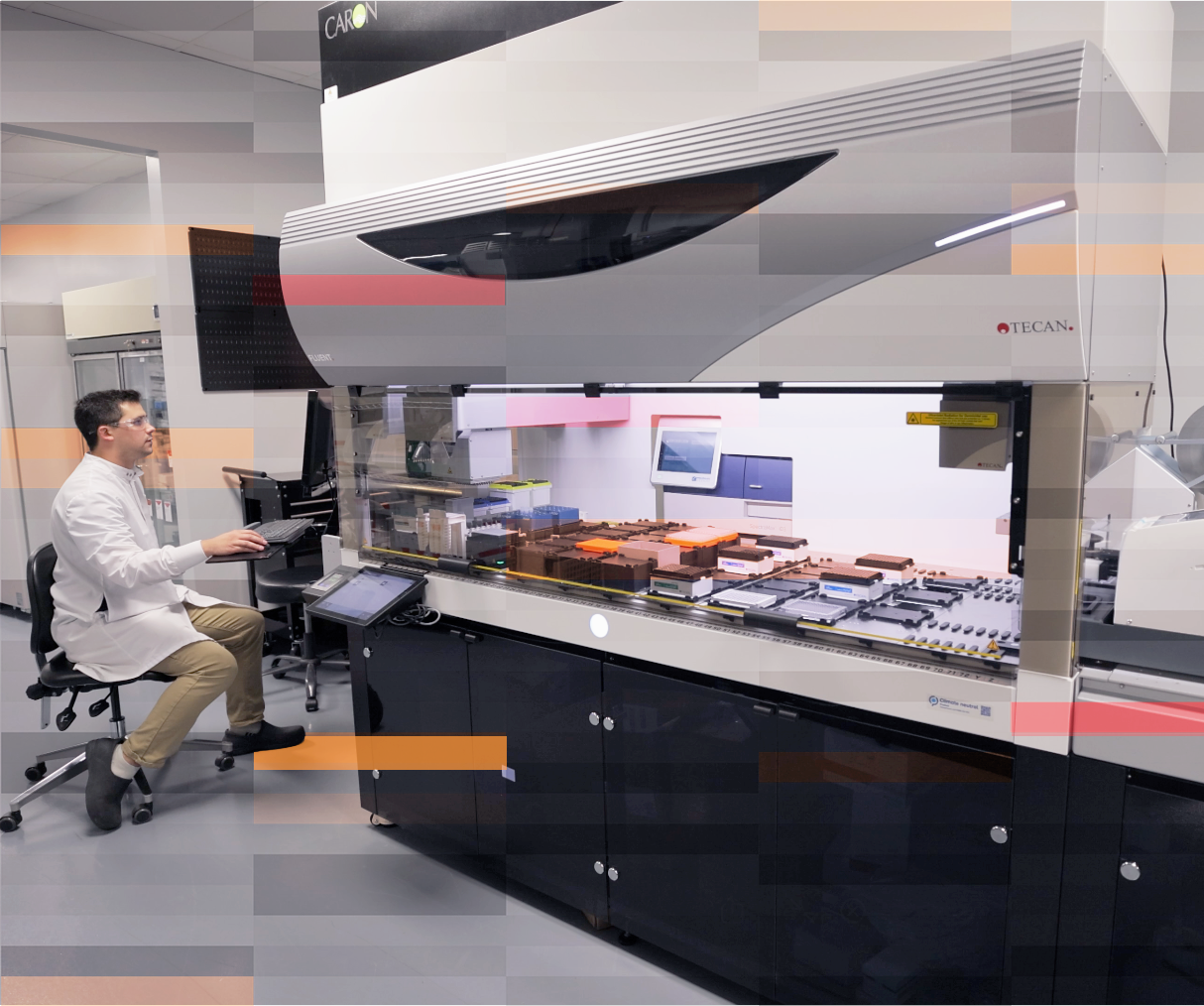
Analytical development strategy is developed alongside process characterization to support the volume, range of matrices, and process understanding required for late-phase studies.
PPQ & Process Validation
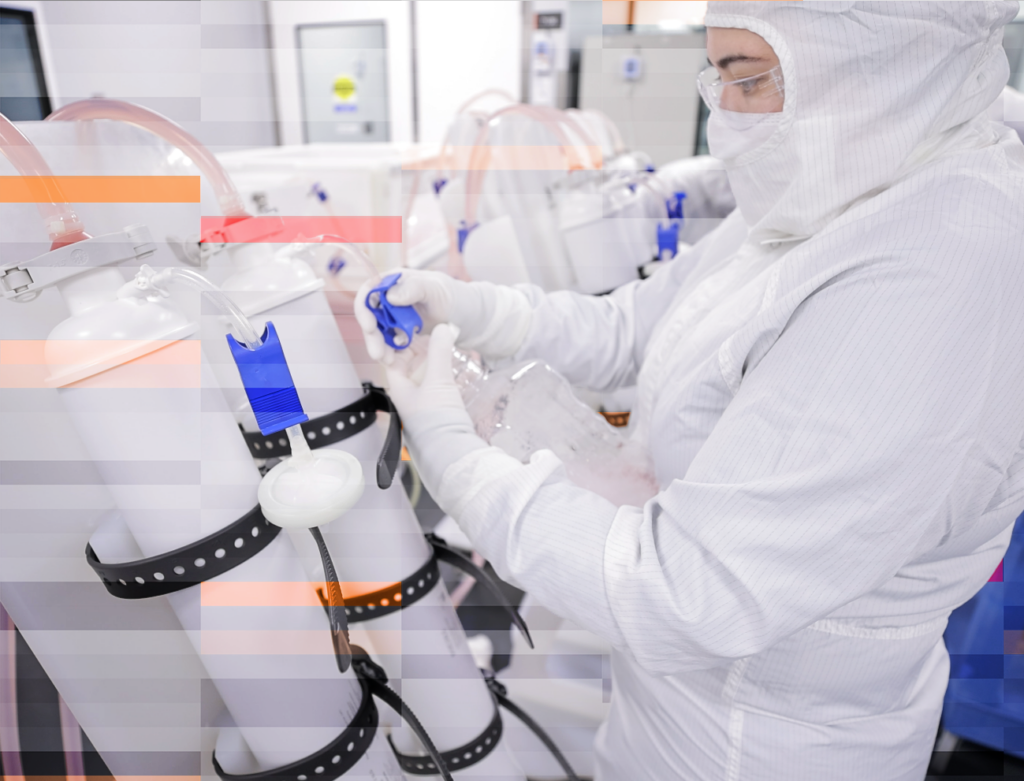
Once you understand your process, the next step is demonstrating that it can perform consistently. Process characterization provides the scientific foundation for process validation and PPQ readiness, helping establish the process understanding and control strategy needed as your program prepares for commercial manufacturing.
Facility and Infrastructure Readiness for Late-Phase Manufacturing
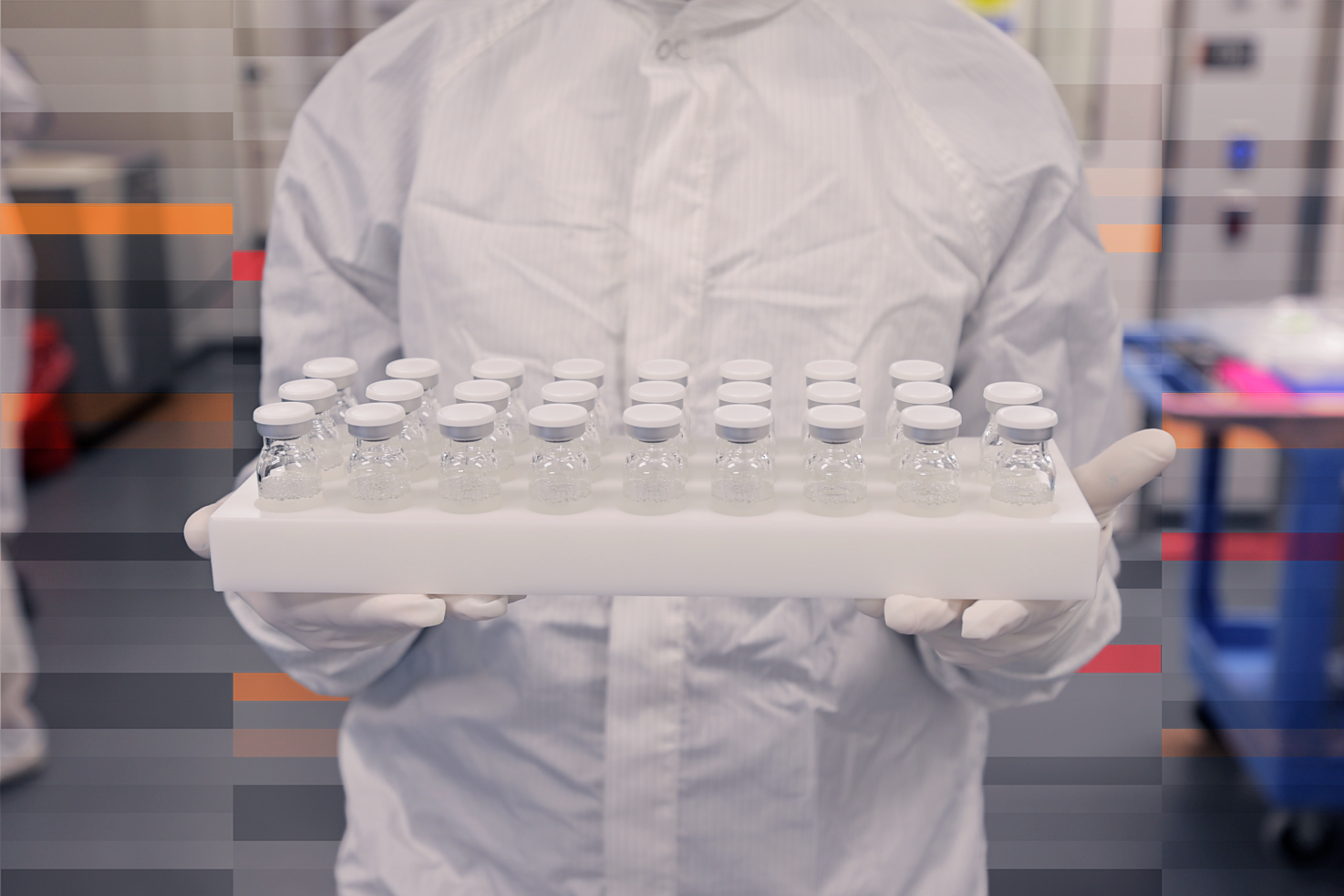
We’re enhancing our facility, equipment, quality systems, and digital infrastructure to support programs in late-phase production.

Facility & Capacity: Scaling for Late-Phase Programs
- Bioreactor scales from 0.25 L scale-down models to 5,000 L
- Expanding late-phase facility infrastructure, including new QC and Analytical Development lab space

Drug Product: Expanding Fill-Finish Capabilities
- Cytiva Microcell fill-finish capabilities for clinical supply
- Advancing implementation of Cytiva SA25 automated fill-finish for clinical and commercial supply

Data & Digital Infrastructure: Strengthening Operational Readiness
- Building digital infrastructure to support commercial planning, materials, inventory, operations, and strengthening quality systems.

Preparing for Your Next Stage?
Let’s talk about where your program is today, what’s ahead, and what it will take to prepare your manufacturing process for commercialization.
Frequently Asked Questions
What is late-phase cGMP manufacturing for AAV gene therapies?
Late-phase cGMP manufacturing supports AAV programs moving into pivotal studies and toward commercialization. In addition to clinical supply, this stage includes process characterization, process validation, process performance qualification (PPQ), and preparation for Biologics License Application (BLA) submission and commercial readiness. Analytical methods are also further qualified or validated as appropriate to support each program’s stage and regulatory requirements.
When should AAV developers begin preparing for commercial manufacturing?
AAV developers should begin planning for commercial manufacturing from the earliest stages of process development, well before pivotal clinical trials. Applying quality by design (QbD) principles early helps build process understanding, identifies potential risks, and establishes a foundation for efficient scale-up, process characterization, and eventual commercial manufacturing.
What is involved in AAV process characterization?
Process characterization uses risk assessment, qualified scale-down models, and statistically designed studies to evaluate how process parameters and material attributes impact critical quality attributes (CQAs). These studies help identify critical process parameters (CPPs), establish appropriate operating ranges, and develop a robust control strategy to support consistent manufacturing and process validation. Forge’s approach aligns with the industry-developed ARM/NIIMBL Project A-Gene framework.
How does process characterization support PPQ readiness?
Process characterization builds scientific understanding of the manufacturing process by evaluating process parameters and their impact on critical quality attributes. Risk assessments and preliminary criticality evaluations are typically initiated earlier in development and are refined using characterization data. These findings help establish appropriate operating ranges, identify critical process parameters, and inform control strategy and PPQ planning. Together, this knowledge supports a robust and reproducible manufacturing process.
What is required to prepare an AAV manufacturing process for PPQ?
PPQ readiness brings together several activities, including process and materials risk assessments, scale-down model qualification and process characterization, an established control strategy, analytical method validation, raw material qualification, equipment and facility qualification, and engineering studies. Forge’s late-phase packages provide a structured path through these activities, from Program Risk Assessment through BLA Readiness.
How do analytical methods need to evolve for late-phase AAV manufacturing?
Late-phase AAV manufacturing requires robust, scalable analytical methods capable of supporting the increased testing demands of process characterization. As programs advance toward commercialization, methods are further qualified or validated based on their intended use, role in the control strategy, and associated risk.
What is the difference between pivotal clinical and commercial AAV manufacturing?
Pivotal clinical manufacturing produces material for the studies intended to support a BLA. FDA recommends making major manufacturing changes before these studies begin, since later changes may require comparability data. Commercial manufacturing uses the process validated through PPQ. PPQ and commercial inventory can be produced before approval, but commercial distribution requires BLA approval, and changes after approval must be reported to FDA.
Hot off the Forge
-
“That mission has brought together an incredible group of scientists and partners who believe, as we do, that children with…
-
“Providing a new visual restoration treatment option for patients living with retinitis pigmentosa is central to our mission,” said Yusaku…
-
Under the partnership, Forge is providing Skylark with process development, current good manufacturing practice (cGMP) manufacturing, and analytical development services.
-
“At ASGCT, we’re proud to showcase how our FUEL™ platform is enabling more doses per batch, improving scalability for broader…